
Do You Need an Ultra Running Coach?
An Honest Guide
Text: Kathrin Kriesch
pictures: Sabine Kriesch, Kathrin Kriesch
illustrations: Kathrin Kriesch
Let me start with something a coach isn’t supposed to say: plenty of people don’t need an ultra running coach.
If you’ve finished a few ultras, you know how your body reacts to long days, you’re under 35, you enjoy planning your own training and your life is predictable enough to stick to a plan, you can do very well on your own. But for a lot of runners, a coach makes the difference between getting to the start line healthy and getting there exhausted, injured or DNF. That’s especially true if you’re stepping up to a first 100K or 100-miler, racing in the Alps, or training around a full life.
Once your body is changing with age, and with perimenopause, menopause or andropause (the mens version of menopause, but not as dramatic), the training that worked at 30 can quietly stop working: recovery takes longer, sleep and energy shift, injuries lingern, body parts start hurting after a run. Most plans and most advice you’ll find online were never written with that in mind.
This guide helps you work out which group you’re in, what you’d actually pay for, and how to choose a coach if you decide you want one.
What an ultra running coach actually does
A training plan tells you what to do. A coach decides what to do when life happen. In practice, a good ultra coach:
- Builds the plan around your real week, including work trips, your kids soccer practice, meeting friends for brunch, holidays and the days you’re simply tired
- Adjusts as you go, based on how training is actually going rather than how a template assumed it would
- Plans strength work properly, in cycles alongside your running, not as a loose list of exercises. After a certain age, strength training becomes as important as your long runs, maybe even more important to maintain muscle and bone mass.
- Works on the unglamorous race topics: fueling and gut training, gear, pacing, aid stations, crew and cut-off times
- Gives you an outside view when your head is telling you to do more (or quit)
What a coach can’t do is run the miles for you. Coaching works when you do the work and the plan is built and adjusted so that you can.
Newsletter

You probably don’t need a coach if…
- You’ve finished the distance before and know what works for you
- You enjoy designing your own training and you’re good at holding back when you should rest
- Your goal is an experience, not a result, and a free or low-cost plan covers your needs
- Your budget is tight and a one-off plan gets you 80% of the way there
- Your life is quite predictable and you don’t have much commitments that take your time
That’s a legitimate way to do it, and a good plan is a fine choice.
You probably do if…
- It’s your first 100K or 100-miler, where mistakes in fueling, pacing or gear are expensive
- You’re racing in the mountains and your ultras so far were flatter, lower or less technical or you come from road running. Alpine terrain, weather and long descents are underestimated all the time, and it’s one of the most common reasons runners DNF at races like UTMB (in my opinion)
- You’re training with your partner or friends for the same event and want a plan that works for each of you
- You’re 35 or older, or in perimenopause or menopause, and want training that respects recovery, hormones and joints, rather than a program written for a 20-year-old who could train and party without consequence
- Your calendar is full: (business) travel, family, childcare, holidays, parent,s in-laws, weddings that you need to build your training around
- You keep getting injured or burning out and can’t see why
- You’ve had a DNF and want a different approach next time
- You want a real shot at your age-group podium, not just a finish
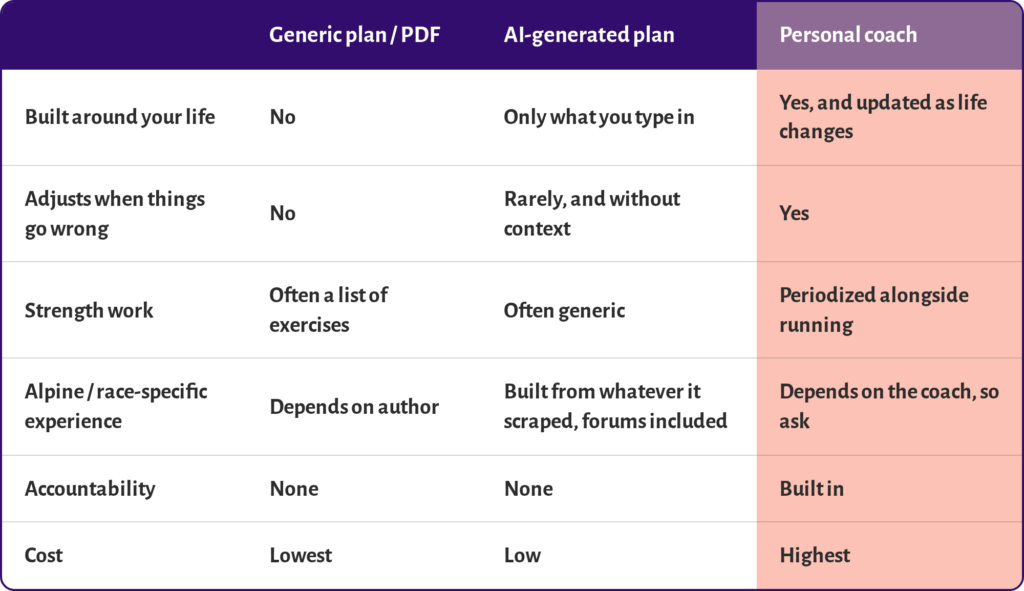
I’m biased, as I’m not a big fan of AI, so I would say: a plan stitched together from forum threads, whether by you or by an AI, can look convincing and still be wrong for your body, your age and your terrain. Bear in mind: Any AI is only as good as the data that is behind. Most AIs rely on data and information that is available on the internet for free. And the internet is still in big parts male & white. Some AIs are trained with data from Reddit and similar platforms only. Asked yourself this: Do people that look like you appear on the internet when you search for ultra- and trailrunning? if not, you should probably not rely on AI for your training plan.
The same goes for advice from people in real life. You know the type: the guy at the trailhead, the run club or the aid station who has finished one 20K, has never met a training principle and knows mountains mainly from Social Media and YouTube, and is now very happy to pass his “what works for me” tips on to you, unasked. Sometimes it’s useful. Often it’s a plan that worked for one 30-year-old mansplainer body with no responsibilities, no kids (or a wife that does all the mental work for him) and no perimenopause, delivered with total confidence. Enthusiasm is not experience, and it’s definitely not a training plan for you.
What does an ultra running coach cost?
There is no standard price. Coaches set their own rates, and the spread is wide. Based on published coaching rates and cost guides, the picture looks roughly like this:
- Budget and limited support: around $30 to $100 per month, often a plan with light check-ins
- Typical individualized online coaching with weekly contact: commonly around $150 to $300 per month
- Higher-touch or well-known coaches: $300 to $400 per month and up
- One-off fees for a specific goal: often quoted somewhere in the $250 to $1,000 range
- Specialist coaches, for example ultra, triathlon or mountain, tend to charge a premium over general road running coaches
Treat these as ballparks. Rates differ by country, by coach and by how much contact you get. My own packages are on the coaching page.
What drives the price:
- How much contact you get (monthly check-in vs. weekly calls vs. messaging)
- How individual the plan is, and how often it’s rewritten
- Extras like strength programming, gear and race-day logistics
- The coach’s experience in your specific terrain and distance
What to compare: don’t compare monthly prices alone. Compare what you get for them, and what a failed race costs you in entry fees, travel and lost training months. For a big goal like a mountain 100-miler, that’s usually more than a few months of coaching.
Money should not stop you from trail- and ultrarunning. That’s why I offer coaching scholarships. Just send me an e-mail at hello@mountainbrat.com and see when there is availability.
How to choose an ultra coach
Don’t pick a coach by their personal results or certificates alone.
A coach’s own race results say little about how well they coach you. Being fast, or winning races, doesn’t mean someone can explain, adapt or motivate. Some of the best coaches never won anything, and some great athletes are poor coaches, because what works for a talented full-time athlete rarely fits a person with a job, a family and a body that needs more recovery.
Certificates are a similar story. They can show that someone has studied the topic and knows the theory. In Europe, for example, you can complete a trail running guide course in a weekend. That’s not worthless, but it doesn’t tell you whether someone can coach you through a 100-miler in the Alps. Look at experience with athletes like you, not only at the coach’s own CV.
What matters at least as much:
- Empathy: Does the coach listen, ask about your life and take your concerns seriously?
- A non-pro athlete view: Does the coach understand what it means to train around a job, a family and stress, rather than treating you like a full-time athlete?
- Fun: Ultras are a hobby you chose. A coach who turns it into a rigid spreadsheet and takes the joy out of it isn’t doing you a favor. Good training should still leave room for enjoying the trail.
Ask these questions before you commit:
- Have you coached runners for my distance and terrain? Mountain ultras are not road marathons with extra steps.
- How do you adapt the plan when my week falls apart, I get sick or injured? The answer shows whether you’re buying a plan or a coach.
- How is strength training handled?
- How often will we talk, and how?
- Do you work with people my age and in my situation?
- How do you keep training enjoyable? The answer shows whether the coach remembers why you started.
- Can I try before committing? A free intro call should be standard.
Red flags: guarantees of finishing times, a one-size-fits-all plan with your name on it, no questions about your life or injury history, a pitch built mostly on the coach’s own results, and pressure to sign long contracts before you’ve talked.
Online or in person?
For most ultra runners, online coaching works well. Your training happens on your trails anyway, and you share data through Strava or a similar app, with video or phone calls for the things that need talking through. A coach “near you” matters less than a coach who understands your terrain and goal.
However, what can make a difference in person is having a community around you. Whether it’s a run club or friends that join you for your long runs & hikes, sometimes it’s just more fun to do it together. Also having people who think it’s totally normal to run 100 kilometer or 100 miles and who think 50k is a short distance – they are priceless. When I first moved to Garmisch-Partenkirchen and participated in one of the run club, we had drinks together after our community run. Everyone was talking about which distance they are doing in the next edition of ZUT (Zugspitz Ultra). And it seems that I was one of the beginners, only planning to run the 74 kilometer race while everyone else was training for the 100 kilometers. That’s when I knew I meet my people.
Why alpine experience matters more than most people think
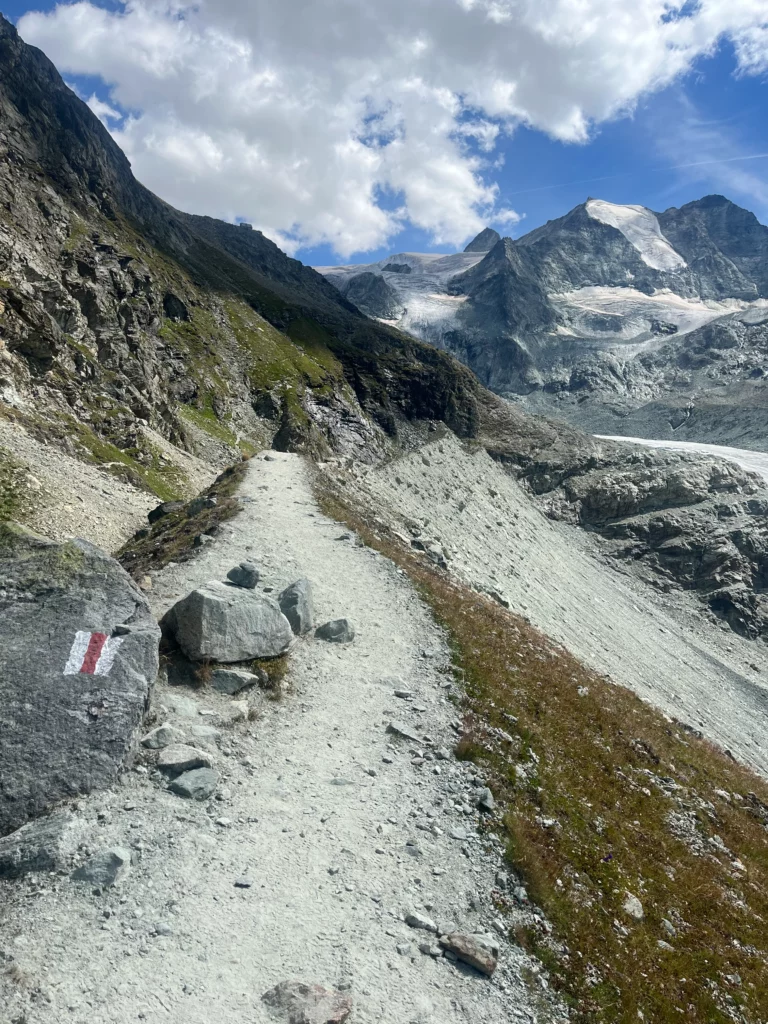
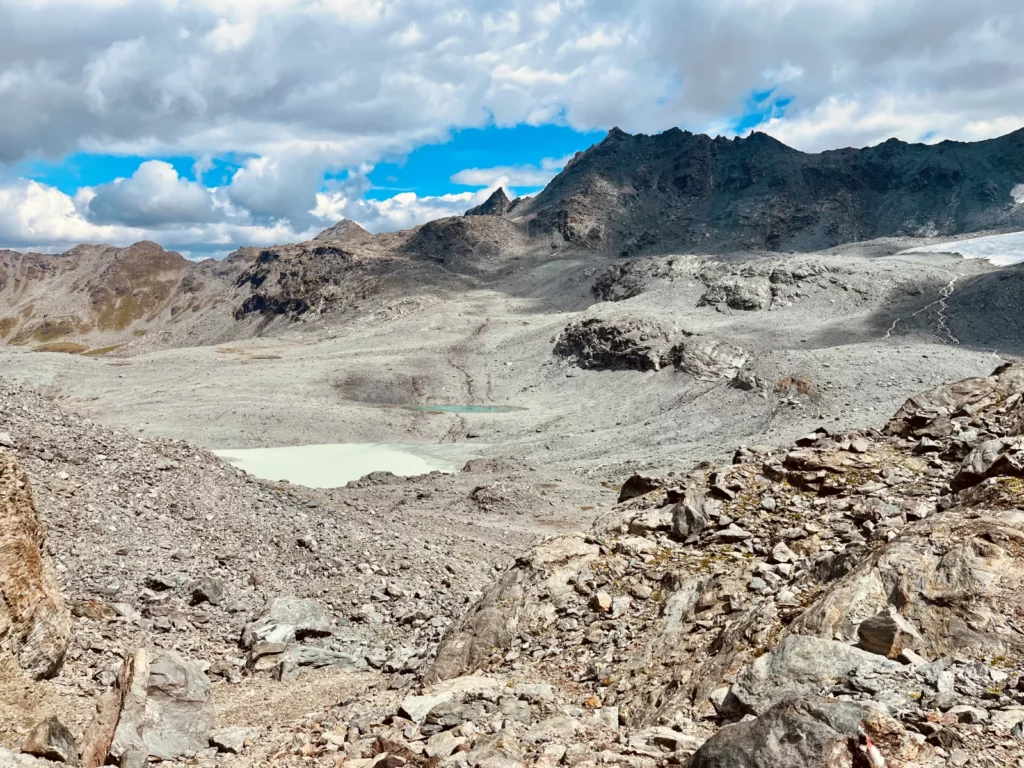
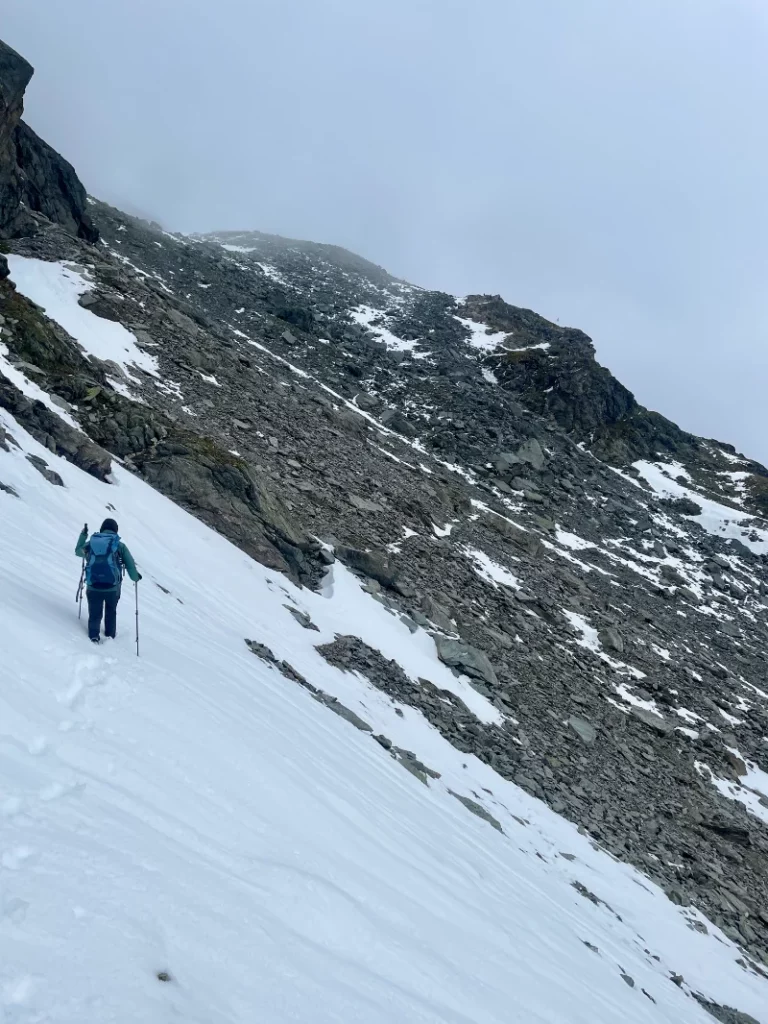
I’ve been at the finish lines, aid stations and cut-offs of races like UTMB and Trail Verbier St-Bernard, and I’ve seen too many runners not finish. The reason is rarely fitness. Most of them underestimated the alpine terrain: the steep, technical descents, the altitude, the cold and weather that changes within an hour, and the cut-offs that don’t care how strong you felt at the start. Then they DNF’d.
A coach who has only worked with flatter or lower-lying races can build you a fit runner. A coach who knows the mountains also prepares you for what the course actually asks of you: how to train descents and technical ground, what to carry, how to pace in altitude and how to plan for aid stations and cut-offs. That’s the difference between being fit enough and being trail ready.

What working with me looks like
I coach trail and ultra runners online, many of them in the second half of life, preparing for races and expeditions in the Alps. My background is in competitive sport, women’s coaching, expedition coordination and years on the trail myself, including in alpine environments around the world. Plans are built around your real life, trips and family included, and cover endurance, strength, mental training, gear, fueling and the logistics of race day.
I’m not a professional ultra athlete, and I don’t think you should need one as a coach. I know what it’s like to fit training around work and real life, and I care that it stays fun. Judge me by the same questions as above.
I also coach couples and groups of friends who are training for the same event. You train for the same goal, each with a plan that fits your own level and schedule, and you prepare the shared logistics, like crewing, travel and race-day plans, together.
If you’re not sure whether coaching is the right move, that’s exactly what the free discovery call is for. I work with athletes in Europe, the US, Canada and Asia, and I’m flexible with times, including evenings European time, which suits most North American schedules.